Intermittent fasting (IF) or time-time-restricted eating is an eating schedule, not a type of diet. Our body is always in 1 of 2 states, fasted and fed. In a fasted state (after not consuming any calories for 8-12 hours) insulin levels are low, which makes fat burning easy. During this period, the body gains fuel from stored fat. In the fed state, insulin levels are higher, which interferes with fat burning and allows for energy storing, making fat loss harder. If you eat frequently, insulin level will be consistently high.
Improves: • Metabolism, the gut microbiome, immunity, heart health • Promotes longevity and brain health • Mindful eating • Weight loss (specifically fat loss) • Diabetes and fatty liver
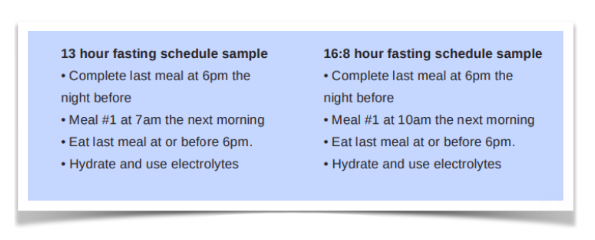
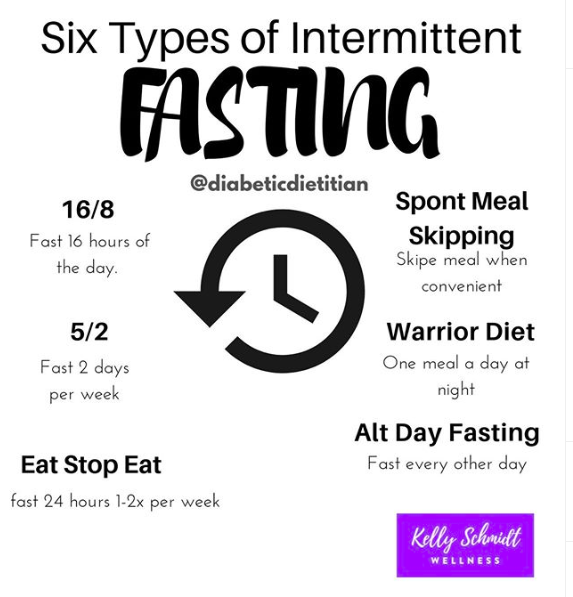
Types of Fasting: • Eating with the sun or fasting for 12/13 hours – a great starting place • 16:8 • 5:2 • 24-hour fasting Intermittent
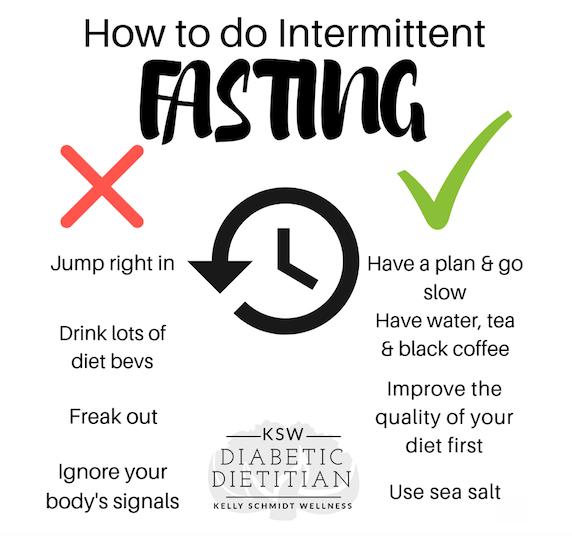
Before You Begin: • Make sure you are in a good candidate: do your homework and get clearance from you, dietitian and doctor. • Clean up your diet: remove processed foods from your meals as much as possible. • Nurture your sleep and rest when your body signals it needs more rest. • Hydrate and use sea salt with your meals to improve electorate balance and energy. • Understand that real physical hunger comes and goes, it does not amplify. • Have fasting drinks handy: water, black coffee, tea, mineral water, broth. • Find ways to distract yourself for usual eating periods. Keep busy. • Know the benefits of fasting, so you know your goals and emotional drive to stick to it. • Remember to break your fast with a high protein, low-sugar meal and avoid processed foods. Eggs, lean meats and non-starchy vegetables are good options.
Go slow, and be patient in finding what works for you. Fasting should be flexible and work with your life and schedule, especially if you are making it part of your lifestyle. With fasting, you do not have to do it daily. You MUST listen to your body and what it needs.
Note, fasting can feel awkward at first, but within a week or two, your body should adapt. As well, those eating a lower-carb diet, even a keto diet, will more easily sustain IF. If you eat predominately carbs (grains, fruit, legumes, sugar, dairy), IF can be harder and even be a stress on your body, increasing cortisol levels. Before you begin, do your homework to make sure you are a good fit.
If you are struggling with adrenal issues or if you are overly stressed IF is not likely a good fit.
Lastly, if you have diabetes, there is supporting research on the effectiveness of doing fasting, but if you anything beyond fasting with the sun (>13 hours), be sure you are prepared and supported to initiate a new pattern of eating.